Call us Get a quote

Special September Pricing

Enjoy 5% off through September 30.

Get a Free Glass Project Estimate

Fill out the form and our team will contact you shortly.

Choosing the right glass is half of getting a glass project right. The wrong pick shows up later — a green tint on what should’ve been crystal-clear, a partition that leaks every conversation, a shower panel that feels flimsy. The right one you never think about again.

Different glass types trade off strength, clarity, privacy, and sound control depending on where they go and how they’re used. Whether it’s a frameless shower door, a custom mirror, an office partition, or a railing, this is the glass we work with across Manhattan and NYC — and where each one belongs.

Understanding Glass by What It Has to Do

Glass gets chosen for three jobs, and most projects need one of them more than the others: safety and strength, clarity and appearance, or privacy and design. Everything below fits one of those.

splash guard enclosure new york

Tempered Glass

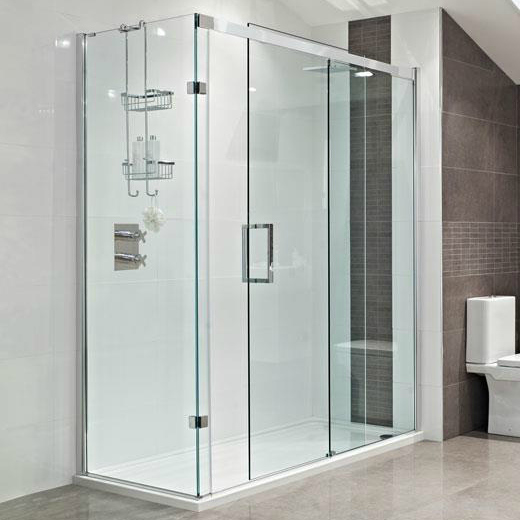
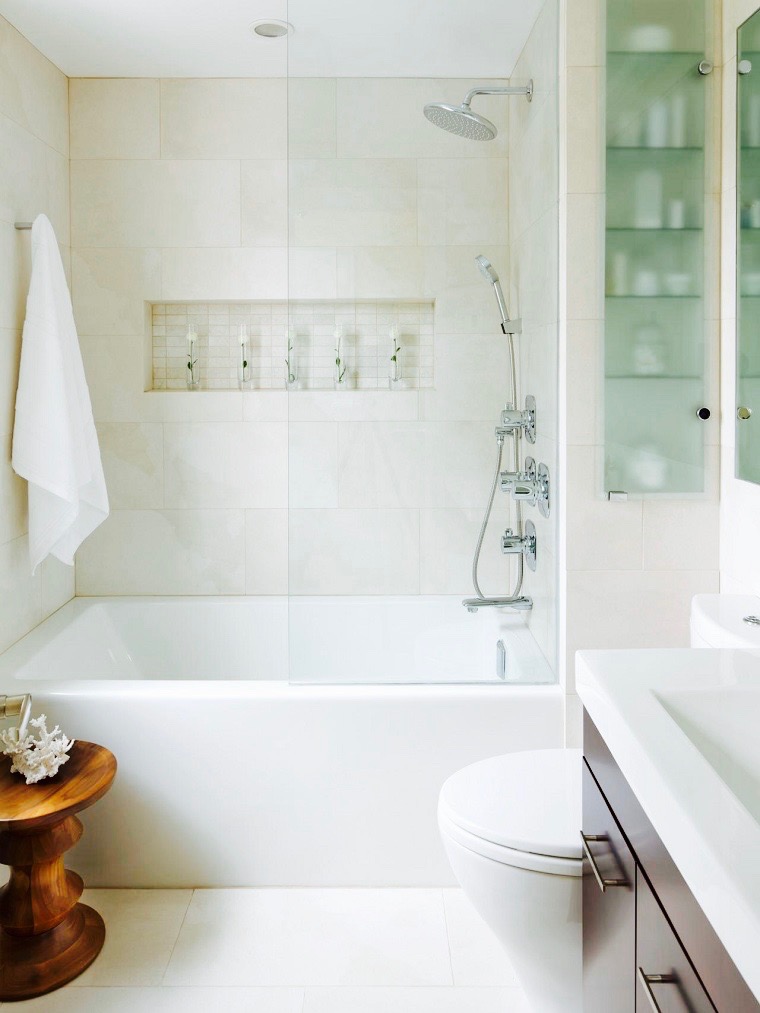
Tempered glass is heat-treated so it’s far stronger than ordinary glass, and when it does break, it crumbles into small blunt pieces instead of sharp shards. That safe-breakage behavior is why it’s the default for anything people touch, walk past, or stand behind every day.

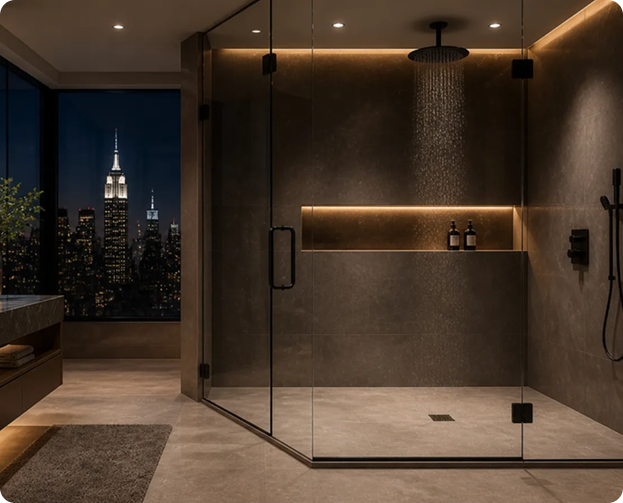
Best used for: frameless shower doors, glass table tops, glass shelves, glass partitions.
Laminated Glass

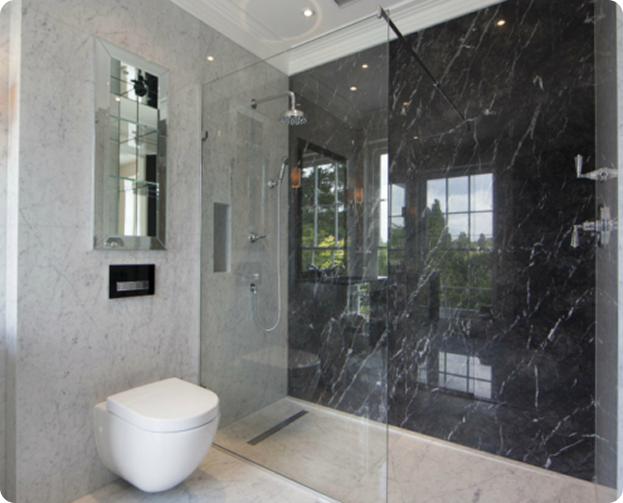
Laminated glass is two or more layers bonded around an interlayer, so a cracked panel tends to stay together instead of falling clear. The same interlayer dampens sound, which makes it a common pick for partitions and street-facing glass in noisy buildings.

Best used for: office partitions, interior glass doors, glass floors, decorative panels.

glass balcony glass factory nyc inc

Low-Iron Glass

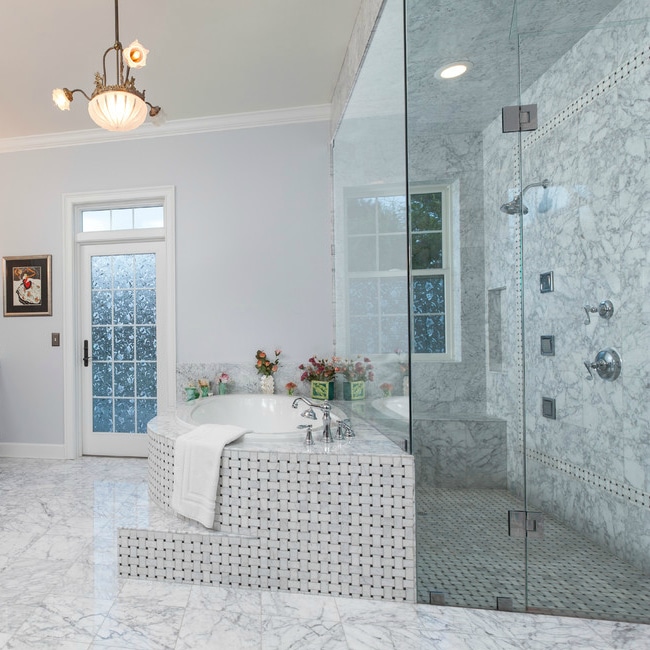
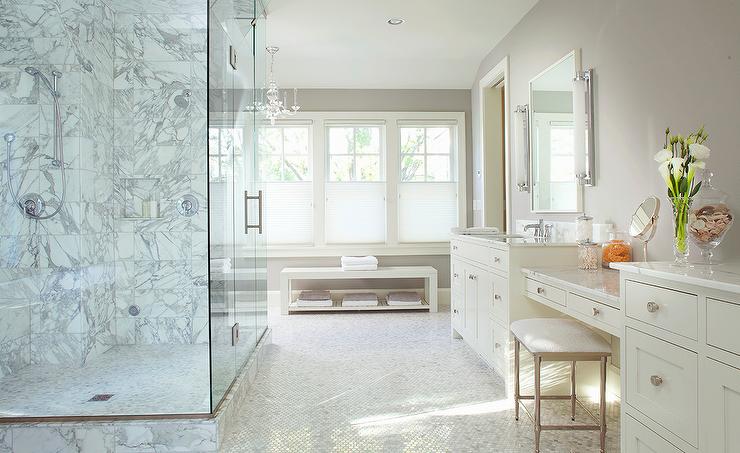
Standard glass carries a faint green tint that most people never notice — until they see low-iron next to it. With the iron content reduced, low-iron reads truly clear, so whites stay white and tile and stone show their real color. The difference is most obvious on thick panels and at exposed edges.

Best used for: custom mirrors, frameless shower doors, glass table tops.
Frosted Glass

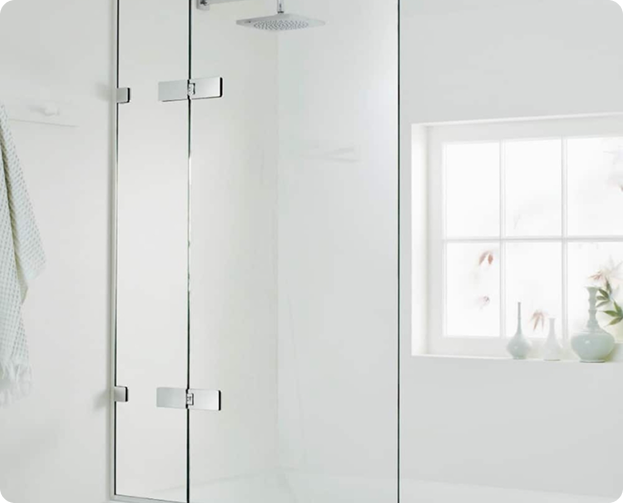
Frosted glass is treated to scatter light, so it passes daylight through while blurring whatever’s behind it. It’s the privacy option that doesn’t darken a room — which is why it lands in bathrooms, meeting rooms, and doors where you want light but not a clear view.

Best used for: glass partitions, interior glass doors, frameless shower doors.

Clear Glass

Clear float glass is the versatile standard — full transparency at the best value, and the right answer when there’s no reason to pay for anything else. It works across most interior installs where clarity and cost both matter.

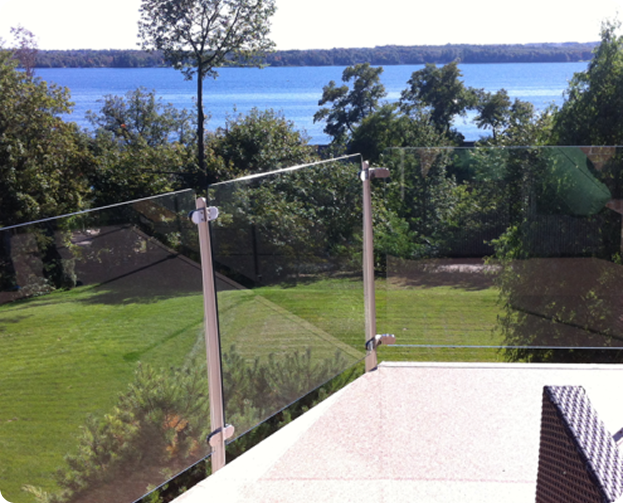
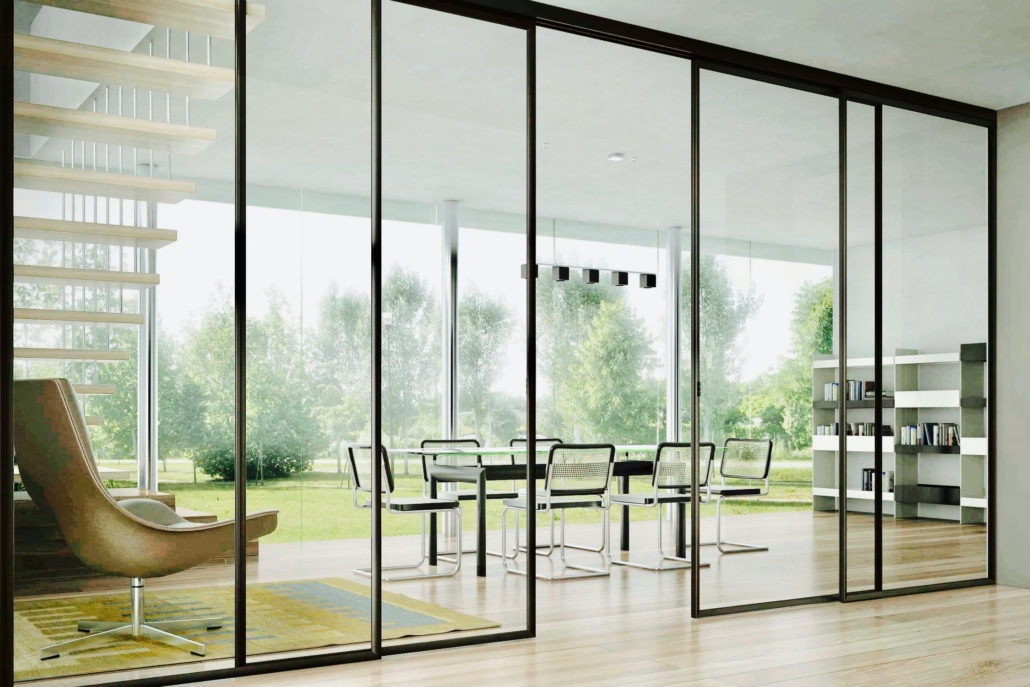
Best used for: glass shelves, glass railings, glass partitions.
Tinted Glass

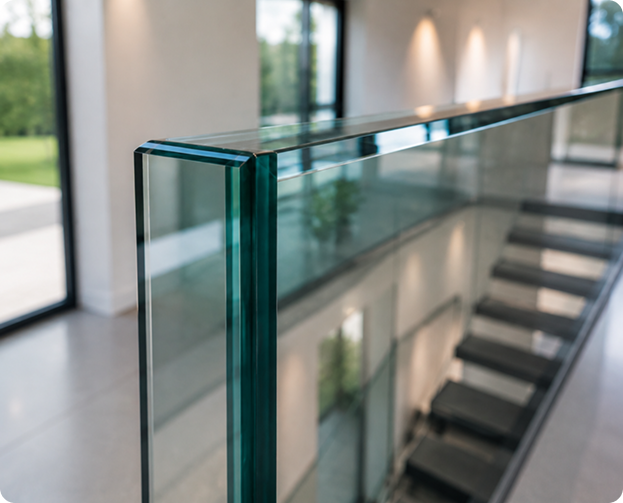
Tinted glass adds a layer of color that cuts glare and softens light while giving a space a specific look. It’s chosen as much for style as for function — a design decision more than a safety one.

Best used for: glass doors, glass partitions, decorative installations.

Glass Selection for Manhattan Properties

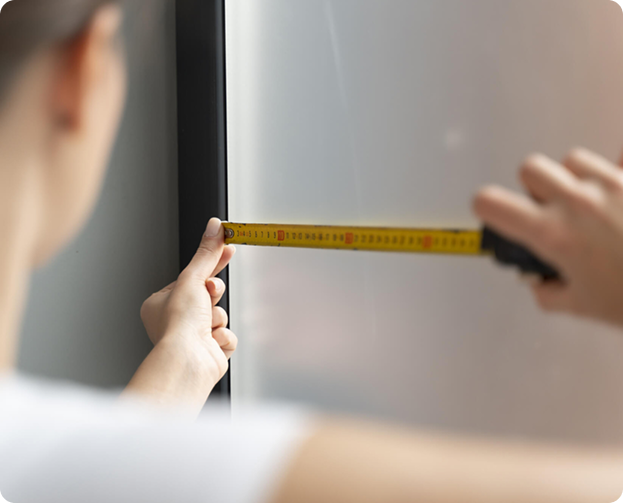
Manhattan buildings make glass harder than the glass itself. Uneven pre-war walls, freight-elevator limits, high-rise access rules, and co-op requirements all shape what can go in and how. We measure for the building that exists and match the glass thickness and fabrication to the real conditions — see our work with architects and contractors for larger projects.

Glass Type Comparison for Manhattan Projects

  • Glass Type
  • Tempered
  • Laminated
  • Low-Iron
  • Frosted
  • Clear
  • Tinted
  • Best Use
  • Shower doors, partitions, table tops
  • Office partitions, street-facing glass, floors
  • Luxury interiors, custom mirrors
  • Bathrooms, meeting rooms, doors
  • Shelves, railings, partitions
  • Doors, facades, decorative
  • Advantage
  • Impact-resistant; breaks into small blunt pieces
  • Stays together when cracked; dampens sound
  • Truly clear, no green tint
  • Privacy without blocking light
  • Versatile, best value
  • Cuts glare, adds color

Portfolio

Examples of completed glass installations across Manhattan:

  • Custom mirror installation — Midtown Manhattan
  • Frameless shower door — Upper East Side
  • Glass partition — Financial District
  • Glass tabletop installation — SoHo

Reviews

Clients across Manhattan trust Glass Factory for precision glass installation, reliable measurements, and professional service.

I like to work with these guys. Understandable prices, high quality. They finish all projects on time.

Thank you Glass Factory NYC for glass table top and shower door! It looks perfect.

I wanted to renovate my kitchen. That’s good that I found this website. I was confused and didn’t know what type of glass kitchen backsplash would be better for me. I made an appointment. Specialist came over to me at the same day, told me that mirrored backsplash would be the best option. And now it looks very nice. Thanks a lot!

I’m sure of these guys. I work with them for two years and all smooth. Will it be shower door, custom mirror or glass countertop I don’t need to worry because I know that my clients will be satisfied.

Frequently Asked Questions

Tempered and laminated are the two safety glasses, and they’re strong in different ways. Tempered resists impact and breaks safe. Laminated holds together when cracked because of its interlayer. Demanding jobs — overhead glass, tall railings — often use both at once.

Tempered, in almost every case — it’s the safety standard for an enclosure whatever the style. If the bathroom is high-end and the tile or stone color matters, low-iron tempered removes the green tint so those colors read true. On a thick shower panel the upgrade is easy to see.

On a small piece, the difference is subtle. On a large mirror, a thick tabletop, or a frameless shower, it’s obvious — standard glass shows green at the edges and across big spans, low-iron doesn’t. For premium interiors where color accuracy matters, it usually is.

It helps. The interlayer absorbs vibration that a single pane passes straight through, which is why it shows up in partitions and street-facing glass. It’s not soundproofing on its own — the seals around the panel matter as much — but it’s a real improvement in a noisy building.

Most interior glass runs between 3/8″ and 1/2″. Thicker glass holds its own weight without a frame and feels more solid, so frameless showers and larger panels lean toward 1/2″. We size each piece to its span and use so it stays stable.

Need help selecting the right glass type for your project?

Get professional guidance and accurate measurements from experienced glass specialists in Manhattan.

View Portfolio

646 854-76-74