
Tempered vs. Laminated Glass: The Difference You Only Notice When Something Goes Wrong
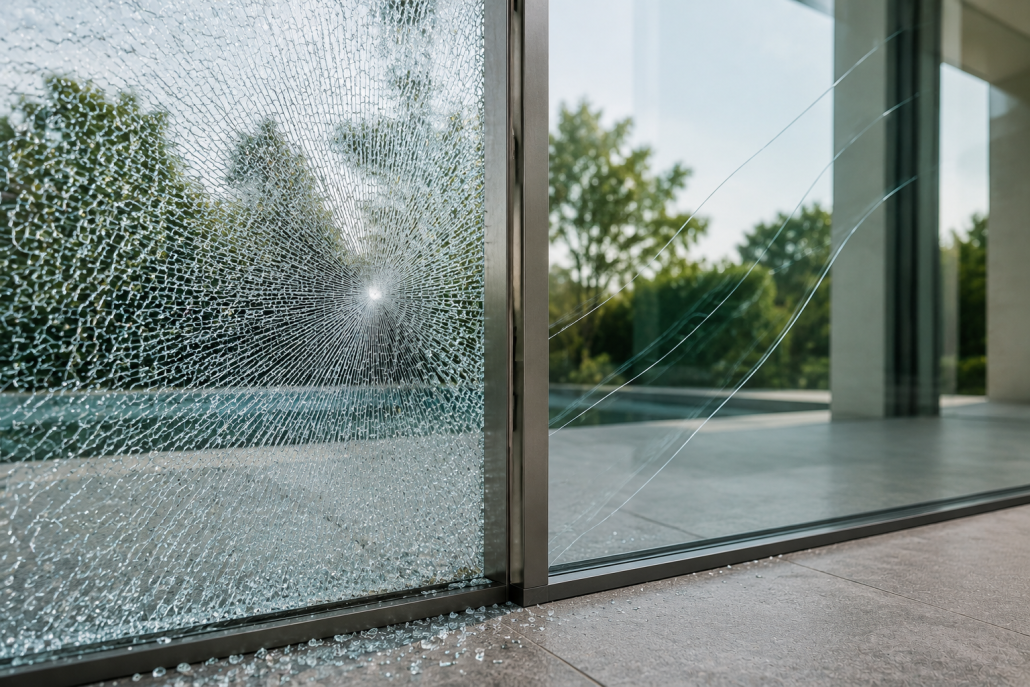
Glass is one of those materials people rarely think about until it suddenly demands everyone’s attention.
A bird discovers your window. Something heavy falls where it absolutely shouldn’t. Or perhaps nothing dramatic happens at all, and you’re simply planning a project that requires choosing the right type of safety glass before anyone starts manufacturing expensive panels.
That’s usually the better scenario.
Most people assume all safety glass behaves more or less the same. Strong is strong, right? Not exactly. Tempered glass and laminated glass are both designed to improve safety, but they respond to impact in completely different ways. The difference isn’t immediately obvious while everything is intact. It reveals itself afterward. Sometimes very dramatically.
Which is precisely why building codes don’t simply suggest one or the other depending on mood. Different applications demand different behavior, and glass, despite looking wonderfully uncomplicated, has an astonishing number of opinions about physics.
How Tempered Glass Breaks
Tempered glass begins its life looking fairly ordinary.
Then it undergoes an intense heat-treatment process followed by rapid cooling that changes the internal stress pattern of the material. The result is glass that’s considerably stronger than standard annealed glass when dealing with everyday impacts and thermal stress.
It’s a clever piece of engineering. However, what also matters a lot is not only how tempered glass survives—it’s how it fails.
Instead of breaking into long, dangerously sharp pieces, tempered glass explodes into thousands of small, blunt-edged fragments. The first time someone sees it happen, it’s almost unsettling. One moment there’s a perfectly clear panel, then the glass turns into a pile of tiny crystals all at once. No warning. Very little negotiation.
That behavior is intentional.
Those small fragments greatly reduce the risk of serious injuries compared with traditional broken glass, which is exactly why tempered glass has become the standard choice for frameless shower doors, many residential windows, glass doors, and countless architectural applications where accidental human contact is expected.
There’s one important limitation, though. Actually, it’s more than a limitation. A rule.
Once tempered glass has completed the manufacturing process, it cannot be cut, drilled, ground, or reshaped in any meaningful way. Every hole, every notch, every polished edge has to exist before tempering begins. Afterward, attempting to modify it usually results in an immediate and rather spectacular transformation into those familiar little fragments.
How Laminated Glass Breaks
Laminated glass approaches safety with an entirely different philosophy. Instead of asking, “How should I break?” it asks, “How can I avoid falling apart?”
The construction tells the whole story.
Rather than relying on a single sheet, laminated glass sandwiches a transparent interlayer—often made from specialized polymer materials—between two or more layers of glass. Heat and pressure permanently bond everything together until the finished panel behaves as one unit.
If the glass suffers a significant impact, cracks certainly appear. Sometimes a great many of them. Spiderweb patterns spread across the surface in directions that seem almost artistic, if you ignore the reason they’re there.
Yet the panel usually stays together. The broken pieces remain attached to the interlayer instead of scattering across the floor.
That ability to remain intact after breakage explains why laminated glass is so common in applications where preventing objects—or people—from passing through the opening matters just as much as surviving the initial impact.
Sometimes more.
Which Glass Is Used for Different Projects?
The question isn’t really which glass is “better.” It’s which one behaves correctly for the situation.
The same material that works beautifully in a shower enclosure may be entirely inappropriate for an overhead skylight. That’s not inconsistency. It’s engineering refusing to guess.
| Application | Tempered Glass | Laminated Glass |
| Frameless shower doors | Standard choice because it breaks into small safety fragments | Occasionally used in specialized systems but uncommon for typical residential showers |
| Glass railings | Frequently used depending on code requirements | Common where post-break containment is required |
| Glass floors | Sometimes combined with laminated construction | Preferred because broken panels remain supported |
| Interior partitions | Common in offices and homes | Selected when sound control or post-break integrity is important |
| Skylights | Often required as part of laminated assemblies | Widely specified because the glass remains in place after breakage |
Many modern architectural systems actually combine both technologies. Tempered, then laminated. One material borrowing strengths from another.
Which One Is Stronger?
This question appears constantly. It also turns out to be slightly misleading. People often use the word “stronger” as though strength were a single quality measured with one dramatic test involving a very determined hammer. Reality enjoys making things more complicated.
Tempered glass generally offers greater resistance to impact and bending forces during normal everyday use. It handles thermal stress remarkably well too, which is one reason it performs so successfully inside shower enclosures and large doors.
Laminated glass isn’t necessarily trying to win that contest. Its greatest strength appears after failure begins. Even when cracked, the interlayer continues holding the broken pieces together, preserving a physical barrier that tempered glass intentionally gives up the moment it shatters.
It’s a fascinating contrast. Tempered glass excels before breaking while laminated glass keeps working afterward. Neither approach is universally superior—they’re answering different questions.
Why Building Codes Often Decide for You
Architects certainly have opinions. Engineers have even more. Building inspectors occasionally have the final word.
Safety codes exist because decades of real-world experience have demonstrated that different locations require different types of glass. A shower enclosure demands one behavior. A glass canopy suspended above pedestrians asks for another entirely. Balcony railings, stair systems, skylights, office partitions—they all introduce different risks, different loads, different expectations.
Professionals rarely begin by asking which type of glass they personally prefer. Preference barely enters the discussion. Instead they evaluate the application, the local building code, structural requirements, impact risks, and long-term performance before selecting the appropriate material.
Sometimes the answer is tempered glass. Sometimes laminated. Sometimes both together.
Glass, despite appearing wonderfully simple, turns out to be a remarkably specialized material once people stop looking through it and start thinking about what happens if something unexpected occurs.
Which, if we’re honest, is exactly what good engineering has always done. It plans for the ordinary day, quietly preparing for the unusual one that everyone hopes never arrives.
Choosing the Right Glass Before Fabrication
One decision made before fabrication can prevent an astonishing number of problems afterward.
Once safety glass has been manufactured, especially tempered glass, changing its dimensions or redesigning the panel is no longer an option. That’s why selecting the correct material at the planning stage matters just as much as accurate measurements and quality installation.
The right choice isn’t always the strongest glass. It isn’t always the most expensive one either. It’s the glass designed to behave exactly the way your project requires, even on the day when something unexpected happens—you usually don’t notice it at all until the moment ithe glass quietly does exactly what it was designed to do.
FAQ
Is laminated glass stronger than tempered?
Not in the way most people imagine. Tempered glass generally has greater impact resistance during normal use, while laminated glass offers superior post-break performance because the interlayer keeps the broken pieces together.
Can shower doors use laminated glass?
They can in certain specialized systems, but frameless residential shower doors are most commonly manufactured from tempered safety glass because it meets building code requirements and performs exceptionally well for this application.
Why does tempered glass shatter?
The heat-treating process creates internal stresses that make the glass significantly stronger during everyday use. When it finally fails, those stored stresses release almost instantly, causing the entire panel to break into thousands of small safety fragments instead of dangerous sharp shards.
Can laminated glass be repaired?
Generally, no. Once laminated glass has been significantly cracked or damaged, replacement is usually recommended because the structural integrity of the panel and its interlayer may no longer meet safety requirements.
Which glass is safer?
Both are safety glass, but they protect people in different ways. Tempered glass reduces injury by breaking into small pieces, while laminated glass improves safety by remaining largely intact after impact. The safer choice depends entirely on the application, which is why building codes often specify exactly which type should be used.


Leave a Reply
Want to join the discussion?Feel free to contribute!