
Glass Design Trends Shaping Manhattan Interiors in 2025
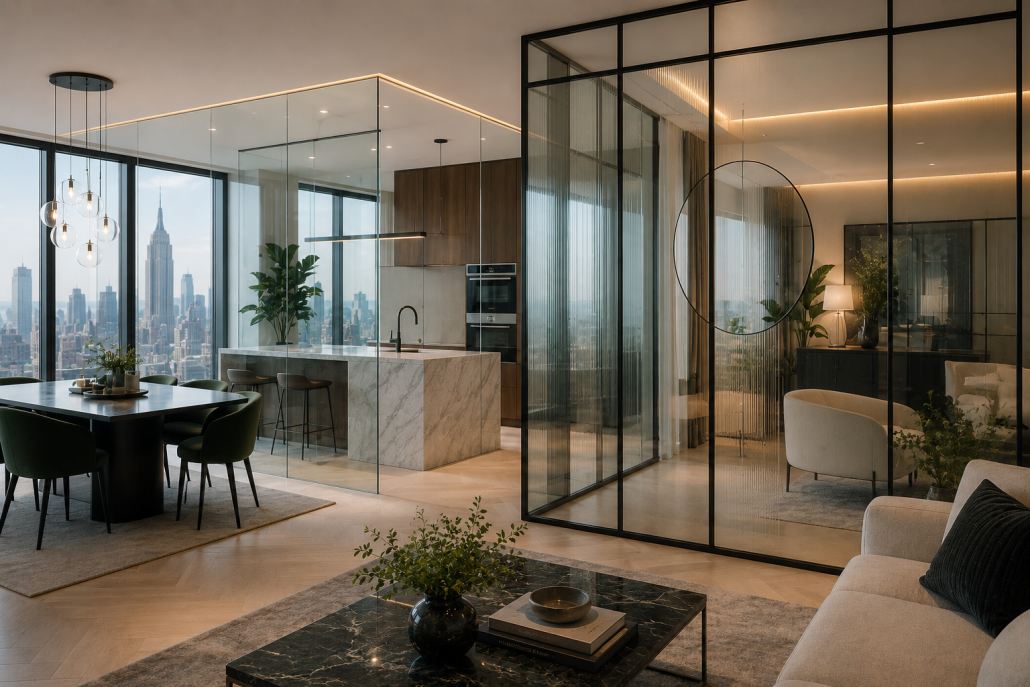
A funny thing has happened to glass over the past few years. It stopped being background material.
For decades, glass mostly had supporting roles. Shower doors. Table tops. Cabinet inserts. Maybe a mirror over a bathroom vanity if things got adventurous. Now it’s often the thing people notice first.
The feature. The conversation starter. The element that ends up on the architect’s mood board instead of quietly supporting everything else.
And if you’re looking for where these shifts show up first, Manhattan remains a pretty reliable laboratory. Designers experiment here. Clients are willing to take risks here. Apartments — especially prewars — often benefit from the contrast between old architecture and contemporary materials.
What follows isn’t a list of Pinterest predictions or social media trends somebody invented for clicks. These are the glass requests we’re actually seeing in Manhattan homes and offices right now. Real projects. Real budgets. Real people signing off on them.
Why Manhattan Leads the Country on Glass Interior Trends
Interior trends don’t appear everywhere at the same speed.
A kitchen trend that feels commonplace in Tribeca might not reach other markets for years. Part of that comes down to renovation volume. Part comes down to architects. Part comes down to the fact that Manhattan homeowners spend an extraordinary amount of time thinking about how to maximize relatively limited space.
Glass happens to be very good at that. A few reasons these ideas often show up here first:
- High concentration of architects and interior designers.
- Strong luxury renovation market.
- Large number of prewar apartments that benefit from contemporary interventions.
- Constant demand for light-enhancing materials.
- Smaller floor plans that reward visual openness.
In other words, glass solves actual problems here. It isn’t just decorative.
Browse our portfolio to see recent projects.
The Six Glass Trends Manhattan Designers Are Specifying Right Now
Not every trend survives. Some deserve to disappear. A few stick around because they solve practical design problems while also looking good.
These are the ones showing the strongest staying power.
Fluted and reeded glass: texture replacing transparency in partitions and cabinet fronts
This might be the biggest shift we’ve noticed recently. For years, the default choice was clear glass. Now many designers want texture. Not heavy texture. Just enough.
Fluted and reeded glass softens visibility without completely blocking light.
Popular applications:
- Interior partitions.
- Kitchen cabinet fronts.
- Pantry doors.
- Home office enclosures.
- Closet systems.
Why people like it:
- Creates privacy without darkness.
- Adds visual depth.
- Feels warmer than clear glass.
- Works surprisingly well in both modern and traditional apartments.
The fluted glass interior design trend is interesting because it feels contemporary and old-fashioned at the same time.
That’s harder to achieve than it sounds.
Back-lit mirror panels: the statement wall that replaced the gallery wall
Ten years ago everyone seemed to have a gallery wall. Then everybody else had one too. Design trends can be cruel like that. Back-lit mirrors are increasingly becoming the modern replacement.
Common locations:
- Entryways.
- Dining rooms.
- Living room feature walls.
- Luxury bathrooms.
Benefits:
- Adds ambient light.
- Creates depth.
- Makes smaller rooms feel larger.
- Functions as both lighting and design element.
The best installations don’t scream for attention. They sort of glow quietly in the background. Which is usually more effective.
Colored back-painted glass beyond white: terracotta, sage, and deep navy in kitchens
For years, white dominated back-painted glass. Still popular. Still works. But lately we’re seeing much more color — especially in kitchens.
The back-painted glass kitchen trend NYC designers are embracing right now leans toward softer, more natural tones.
Common requests:
- Sage green.
- Deep navy.
- Terracotta.
- Clay-inspired neutrals.
- Muted charcoal.
What’s interesting is that people aren’t choosing louder colors. They’re choosing richer colors. Different thing entirely.
Frameless everything: doors, shower enclosures, and railings with zero visible hardware
This isn’t exactly new. It’s just becoming more extreme. The goal now seems to be making hardware disappear whenever possible.
Applications include:
- Frameless shower enclosures.
- Interior glass doors.
- Stair railings.
- Office partitions.
Designers like it because:
- Sightlines remain uninterrupted.
- Rooms feel larger.
- Architectural details become more prominent.
- The glass itself becomes the focus.
The frameless glass bathroom 2025 movement is really part of a larger push toward visual simplicity. Less stuff. Fewer interruptions. Cleaner lines.
Oversized custom mirrors: single panels floor-to-ceiling replacing gallery arrangements
Mirror walls are coming back. Sort of. But not in the way people remember. Nobody is asking for mirrored ceilings. Thankfully. Today’s approach is much more restrained.
Current preferences include:
- Floor-to-ceiling panels.
- Minimal seams.
- Large-format installations.
- Architectural integration.
Particularly effective in:
- Narrow hallways.
- Small living rooms.
- Dining areas.
- Compact Manhattan bedrooms.
A single oversized mirror often works better than six smaller decorative mirrors trying very hard to be interesting.
Structural glass floors and bridges: from loft novelty to serious renovation request
Five years ago, these were mostly conversation pieces. Now we’re seeing legitimate inquiries. Not constantly. But enough to notice.
Applications include:
- Duplex renovations.
- Loft conversions.
- Stair landings.
- Specialty architectural features.
Reasons homeowners choose them:
- Light transmission between levels.
- Contemporary architectural impact.
- Increased openness.
- Unique visual effect.
Still a niche request. Definitely not mainstream. But no longer unusual. Which says something.
How to Apply These Trends in a Manhattan Apartment Without Overdoing It
This is where projects occasionally get into trouble. A trend works beautifully. Then someone decides they need six trends. In the same room. That’s usually when things start feeling like a hotel lobby designed by committee.
The simplest rule is surprisingly effective: One major glass statement per room. Maybe two. Rarely more.
For example:
- Fluted partition + neutral materials.
- Oversized mirror + restrained furnishings.
- Colored backsplash + simple cabinetry.
- Back-lit mirror + minimal decorative lighting.
Glass tends to look best when something around it stays quiet.
Contrast matters.
The most successful modern glass ideas Manhattan apartments are using right now usually involve restraint rather than accumulation. Which isn’t nearly as exciting as buying more things. But it generally produces better interiors.
Explore our custom glass design services for inspiration.
Conclusion
Every year somebody predicts the next big thing in design. Half of those predictions disappear before the paint dries.
The glass trends gaining traction in Manhattan interior design 2025 projects feel different because most of them solve practical problems alongside aesthetic ones.
Fluted glass creates privacy. Mirrors expand space. Back-painted glass simplifies maintenance. Frameless systems improve sightlines.
Even the more ambitious ideas — structural glass, oversized installations, architectural partitions — tend to emerge from real design needs rather than pure novelty. That’s usually a good sign.
The strongest architectural glass trends New York is producing right now aren’t really about glass. They’re about light. Space. Visibility. And making apartments feel a little larger, brighter, and calmer than they did before.
The glass just happens to be how that gets accomplished.
FAQ
Is fluted glass a lasting trend or will it date quickly?
Nobody has a crystal ball, but fluted glass has historical roots going back decades. Trends with that kind of history generally age better than purely decorative fads.
What’s the most popular glass color for back-painted kitchen panels in Manhattan right now?
We’re currently seeing strong demand for sage green, deep navy, warm terracotta, and muted earthy neutrals.
How do you light a back-lit mirror wall without it looking like a vanity?
The key is indirect, even illumination and thoughtful placement. The goal should be ambient architectural lighting rather than makeup lighting.
Are structural glass floors actually practical in a Manhattan apartment?
They can be, depending on the project. Proper engineering, fabrication, and installation are critical, but they’re no longer limited to purely commercial applications.
Where can I see Glass Factory’s completed projects using these trends?
Our portfolio includes examples of completed residential and commercial installations featuring many of the trends discussed above.


Leave a Reply
Want to join the discussion?Feel free to contribute!