
How to Choose the Right Glass for Your Manhattan Apartment Renovation
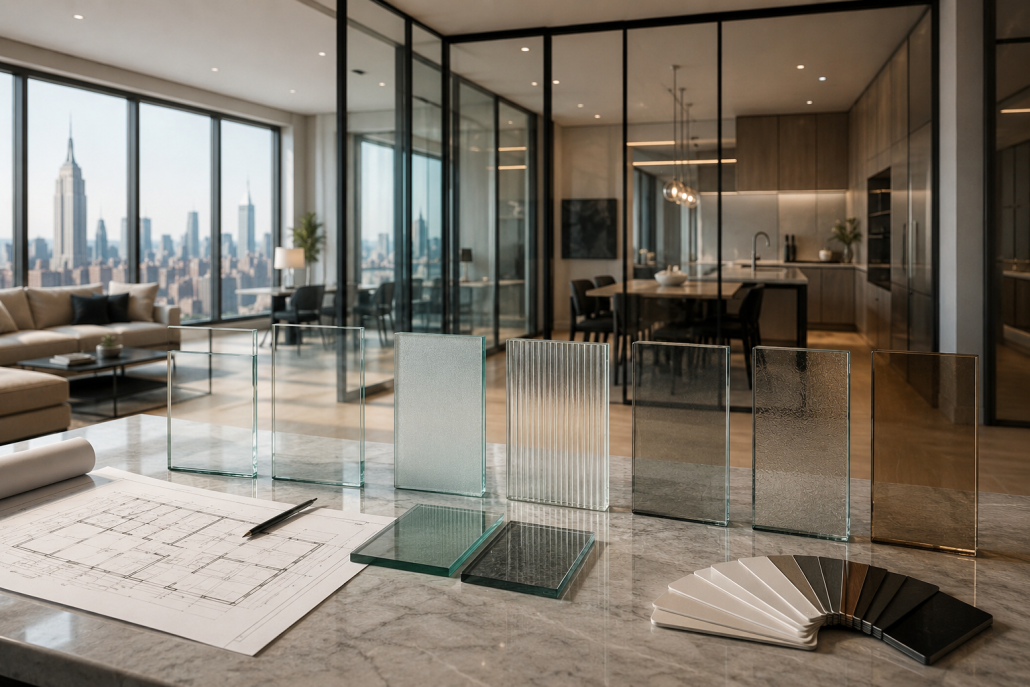
Most Manhattan renovations reach a moment that nobody really plans for.
You’re standing in a partially demolished bathroom. Or a kitchen that currently consists of exposed studs, three extension cords, and a contractor drinking coffee out of a paper cup. Someone asks what type of glass you want.
Tempered? Laminated? Frosted? Back-painted? Suddenly four different people have four different opinions. The confusing part is that they’re often all partially right.
Glass selection isn’t just a design decision. In New York City, it can affect code compliance, co-op approval, installation costs, maintenance requirements, and sometimes the project timeline itself. Choosing the wrong material can create headaches long after the renovation dust settles.
At Glass Factory NYC, we’ve had this exact conversation hundreds of times in Manhattan co-ops, condos, loft conversions, and prewar apartments. The good news is that once you understand what each glass type actually does, the decision becomes much easier.
Why Glass Choice Matters More Than Most People Think
A lot of homeowners assume glass is glass. That’s understandable. Most people don’t spend their weekends comparing glazing specifications. The reality is that the wrong choice can affect much more than appearance.
If you’re researching “how to choose glass for apartment renovation NYC” online, start with function first and aesthetics second. Usually. Not always, but usually.
For a broader overview, see our types of glass guide.
Safety glazing zones in a Manhattan apartment: where tempered is legally required
Certain locations require safety glazing under building code requirements.
Common examples include:
- Shower enclosures: impact resistance is required.
- Glass doors: higher risk of accidental contact.
- Glass near tubs and showers: safety glazing is typically mandatory.
- Stair railings and guards: occupant protection comes first.
- Large panels installed close to walking surfaces: increased breakage risk.
Tempered glass is often the answer in these locations because it breaks into small granular pieces rather than large dangerous shards.
Not pleasant, obviously. But much safer.
Co-op and condo board rules that affect glass selection in NYC buildings
This catches people off guard all the time.
The city might approve something. Your building might not. Those are separate conversations.
Depending on the property, boards may require:
- Product specifications before approval.
- Engineering documentation.
- Licensed installers.
- Insurance certificates.
- Additional reviews for partitions or structural glazing.
Many Manhattan prewar apartment renovation projects involve especially careful review because building infrastructure and alteration agreements can be more restrictive than newer developments.
Every board has its own personality. Some are straightforward. Some appear to have been designed by people who enjoy paperwork recreationally.
Why your contractor’s recommendation and your designer’s preference sometimes conflict
This isn’t necessarily a red flag. They’re often solving different problems.
A designer may prioritize:
- Visual impact.
- Light transmission.
- Finish quality.
- Aesthetic consistency.
A contractor may prioritize:
- Code compliance.
- Installation complexity.
- Durability.
- Cost.
Both perspectives matter.
The best projects usually happen when aesthetics and practicality stop arguing with each other and agree on a solution.
The Four Glass Types Most Common in Manhattan Renovations
Most residential projects eventually land on one of four categories. Each exists for a reason.
Tempered glass: the safety standard for shower enclosures, doors, and railings
Tempered glass is probably the most commonly specified safety glass in residential renovation work.
Typical applications:
- Frameless shower enclosures.
- Glass entry doors.
- Interior partitions.
- Stair railings.
- Guard systems.
Benefits:
- Stronger than standard annealed glass.
- Required in many safety glazing zones.
- Clean, modern appearance.
- Available in multiple thicknesses.
Things to know:
- Cannot be cut after tempering.
- Measurements must be finalized beforehand.
- Breaks into small safety fragments rather than large shards.
If you’re comparing tempered vs laminated glass apartment applications, tempered usually wins when impact safety is the primary concern and structural retention isn’t required.
Laminated glass: the choice for structural applications and noise reduction
Laminated glass consists of multiple layers bonded together with an interlayer. Think of a sandwich. A very expensive, very heavy sandwich. The major advantage is that the glass tends to stay together after breakage.
Common applications:
- Structural glazing.
- Glass floors.
- Skylights.
- Overhead glass.
- High-end partitions.
- Sound-control installations.
Benefits:
- Improved acoustic performance.
- Added security.
- Retains fragments after impact.
- Suitable for specialized structural uses.
This is often the preferred option when Manhattan homeowners want to reduce street noise. Which, depending on the block, can become a surprisingly emotional topic.
Frosted and acid-etched glass: privacy without losing light
This category solves one very specific problem.
People want privacy. People also want sunlight. Normally those goals compete with each other. Frosted glass lets them cooperate.
Popular uses include:
- Bathroom partitions.
- Home offices.
- Interior doors.
- Sidelites.
- Open-plan apartment divisions.
Benefits:
- Diffuses visibility.
- Maintains natural light.
- Modern appearance.
- Available in custom dimensions.
Many homeowners searching for “frosted glass bathroom ideas NYC” are trying to avoid making a bathroom feel smaller while still maintaining privacy.
Frosted glass is often the answer.
Back-painted glass: the design-forward choice for kitchens and feature walls
Back-painted glass has quietly become one of the most requested materials in modern Manhattan kitchens. And honestly, it’s not difficult to see why.
Applications:
- Kitchen backsplashes.
- Feature walls.
- Bar areas.
- Elevator lobby renovations.
- Contemporary bathrooms.
Benefits:
- Easy cleaning.
- Custom color matching.
- Modern appearance.
- Moisture resistance.
- Heat resistance when properly specified.
It creates a cleaner visual surface than tile because there are no grout lines. Tiny detail. Big difference.
The Glass Selection Checklist for Manhattan Apartment Projects
Most projects become easier when you stop asking “Which glass is best?” and start asking a few better questions.
What room is the glass going in?
Different spaces create different requirements.
- Shower: tempered.
- Kitchen backsplash: back-painted.
- Partition wall: frosted or laminated.
- Railing: tempered or laminated.
- Noise-sensitive room: laminated.
Start with location. Everything else follows.
Does your building require a permit for this installation?
Before ordering materials, confirm:
- Building requirements.
- Alteration agreements.
- Board approval procedures.
- Permit requirements where applicable.
Questions about NYC co-op renovation rules glass installations should always be answered before fabrication begins. Fabricating first and discovering restrictions later is expensive.
What’s the priority — safety, privacy, aesthetics, or acoustics?
Identify the primary goal. Then identify the secondary goal. Trying to optimize everything equally usually leads nowhere.
Ask yourself:
- Do I need safety compliance?
- Do I need privacy?
- Do I need sound control?
- Do I want a design statement?
One answer tends to dominate.
What thickness does your span or load require?
Glass thickness isn’t arbitrary. Larger spans generally require greater structural consideration.
Factors include:
- Panel dimensions.
- Mounting method.
- Structural loads.
- Building requirements.
This is where professional measurement becomes important. A surprisingly beautiful piece of glass can still be structurally wrong.
What edge finish and hardware will the glass connect to?
The finishing details matter. More than most people expect.
Common choices include:
- Polished edges.
- Flat polished edges.
- Beveled edges.
- Exposed hardware systems.
- Frameless hardware.
These decisions affect both appearance and fabrication requirements.
Ready to move forward? Request a free estimate. We provide measurement and delivery throughout Manhattan.
Glass Installation Checklist for Manhattan Renovations
Before ordering glass, confirm:
- Final dimensions have been verified.
- Building approvals are complete.
- Permit requirements have been reviewed.
- Hardware selections are finalized.
- Glass type is specified.
- Edge finish is selected.
- Delivery access has been confirmed.
- Installation schedule is coordinated.
This simple glass installation checklist NYC homeowners can follow helps prevent many of the delays we see during apartment renovations.
Conclusion
Most Manhattan renovation decisions involve tradeoffs. Glass is no exception.
Tempered glass prioritizes safety. Laminated glass prioritizes security and acoustics. Frosted glass prioritizes privacy. Back-painted glass prioritizes design impact. None of them are universally better. They simply solve different problems.
If you’re uncertain which direction makes sense, that’s normal. Most homeowners only renovate a few times in their lives. We deal with these decisions every day. And honestly, that’s usually the difference.
You don’t need to become a glass expert. You just need someone who already is.
FAQ
What type of glass is required for shower doors in a Manhattan apartment?
In most cases, shower enclosures require safety glazing, typically tempered glass, to comply with applicable code requirements.
Do I need to notify my co-op board before installing a glass partition or backsplash?
Many co-op and condominium buildings require alteration review before installation. Always verify building requirements before ordering materials.
What is the difference between tempered and laminated glass in plain language?
Tempered glass breaks into small safety fragments. Laminated glass contains an interlayer that helps hold the glass together after impact and often provides better sound reduction.
Can frosted glass be cut to custom shapes and sizes?
Yes. Frosted and acid-etched glass products can generally be fabricated in custom dimensions and configurations depending on project requirements.
How do I know if my renovation requires a NYC DOB permit for glass work?
Permit requirements depend on the scope of work, building conditions, and installation type. Consult your contractor, architect, or renovation professional before proceeding.


Leave a Reply
Want to join the discussion?Feel free to contribute!