
Manhattan Luxury Railings: Unobstructed Views with Frameless Glass Systems
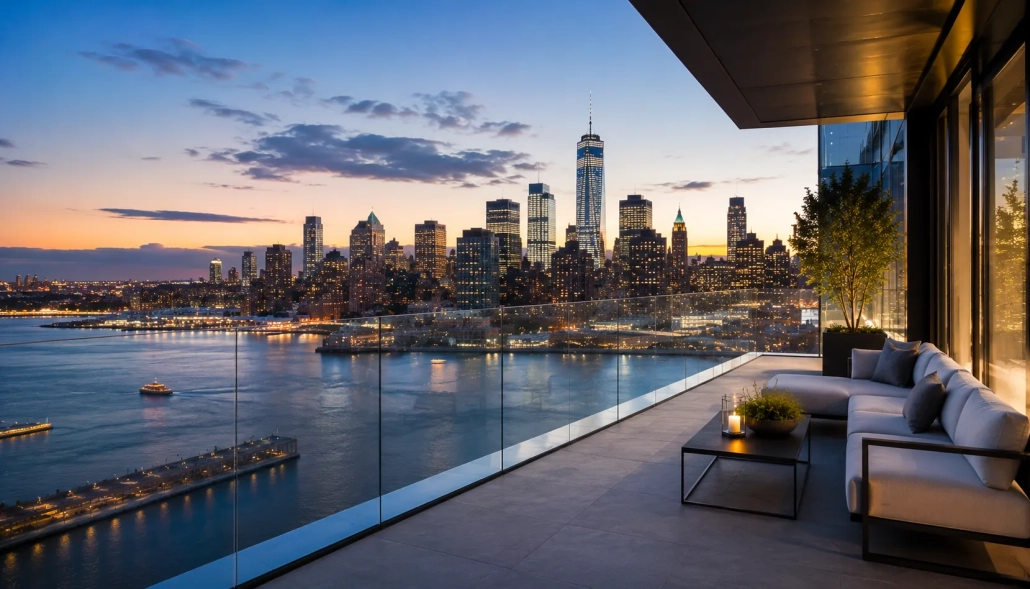
In Manhattan, square footage matters. Light matters more. And views? Views become a personality trait somewhere above the twentieth floor. A penthouse overlooking Central Park or the Hudson does not spend millions on scenery just to hide it behind bulky metal railings. That would be tragic in a very expensive way.
Manhattan glass railings solve that problem by creating nearly invisible protection with exceptional structural performance. The effect is wonderful — the barrier disappears, the skyline expands, the room suddenly feels quieter visually. Luxury glass balustrades NYC designers specify for modern towers and renovated lofts are engineered not only for aesthetics, but for wind loads, safety codes, and the logistical circus that is New York construction.
Key Takeaways
- Frameless systems preserve uninterrupted Manhattan skyline views: No bulky posts interrupting sunsets or dramatic weather rolling across the city.
- Laminated safety glass is critical for high-rise applications: Especially for balconies, terraces, and elevated outdoor spaces.
- Precision engineering ensures long-term stability: High-rise installations require specialized mounting systems designed for structural movement and wind pressure.
Defining Manhattan Luxury in Glass Railings
Luxury in Manhattan tends to look restrained. Quiet confidence. Clean lines. Extremely expensive minimalism pretending not to care about money.
That philosophy shapes modern Manhattan frameless glass railings. The highest-end systems prioritize clarity, precision, and nearly invisible detailing. Especially in luxury apartments where the architecture itself should remain the focus:
- Low-iron glass: Eliminates the subtle green tint found in standard glass. The skyline looks cleaner. White interiors stay actually white instead of faintly aquarium-adjacent.
- Polished stainless steel hardware: Reflective finishes pair naturally with luxury interiors and contemporary lighting.
- Custom powder-coated components: Matte black, bronze, or specialty finishes designed to integrate with upscale design palettes.
- Minimalist base shoe systems: Structural anchoring concealed beneath flooring or trim for a seamless appearance.
Luxury glass balustrades NYC architects specify for penthouses and executive offices frequently combine frameless balcony systems with matching interior glass staircases Manhattan homeowners use to maintain open-concept layouts. Light moves differently through glass. Spaces stop feeling segmented. Even conversations seem more architectural somehow.
The Dangers of Ignoring Aging Railing Systems
A loose railing in a suburban backyard is a problem. A loose railing thirty floors above Manhattan becomes a deeply serious conversation very quickly.
Older railing systems — particularly outdated metal assemblies in luxury buildings — can develop issues that are easy to miss initially:
- Hardware tension failure: Tiny shifts become larger structural movements over time.
- Corrosion inside anchor points: Moisture infiltration damages concealed structural connections.
- Glass edge damage or stress fractures: Minor impacts and building vibration can weaken improperly maintained panels.
- Outdated code compliance: Many older systems no longer meet current NYC safety standards for high-rise applications.
And Manhattan buildings move constantly. Slight sway. Thermal expansion. Wind vibration. Nothing special, but enough that poorly maintained railing systems gradually lose alignment. Buildings breathe in New York. Loudly sometimes.
Routine inspection matters for all high-rise glass railings Manhattan property owners maintain, especially in older luxury towers undergoing renovation.
Why Frameless Glass is the Ultimate Safety Upgrade
Frameless systems look delicate. They are not delicate. Quite the opposite, actually.
Modern Manhattan frameless glass railings rely on laminated structural glass engineered to withstand substantial force, dynamic wind pressure, and continuous use in high-traffic environments. The engineering underneath the visual simplicity is intense. Almost annoyingly impressive.
Key safety advantages include:
- Laminated safety glass construction: Multiple bonded layers maintain integrity even after impact.
- Non-climbable surfaces: Unlike horizontal metal railings, continuous glass panels discourage climbing behavior — less danger to kids.
- High wind-load resistance: Essential for rooftop terraces and upper-floor balconies in Manhattan towers.
- Reduced weak points: Frameless systems minimize exposed joints and connectors vulnerable to corrosion.
For luxury residences, glass staircases Manhattan designers create often pair frameless balustrades with floating treads, producing an almost suspended appearance. Beautiful. Slightly unsettling at first glance. Then addictive visually.
And because the systems remain transparent, natural light spreads more evenly throughout interiors. Narrow stairwells suddenly feel larger. Hallways lose that compressed feeling many Manhattan apartments quietly suffer from.
Contact us and schedule a private consultation today.
Manhattan Installation and Labor Costs
Luxury railing projects in Manhattan involve more than fabrication alone. Logistics become part of the engineering equation:
- Building access restrictions: Elevator reservations, loading dock schedules, protected corridors — every building invents its own procedural mythology.
- High-rise material transport: Large laminated panels require careful handling and specialized equipment.
- Custom fabrication requirements: Frameless systems demand precise measurements with very small tolerances.
- Insurance and compliance documentation: Manhattan buildings often require extensive COI paperwork before installation begins.
High-end penthouse projects with custom low-iron glass and specialty coatings can exceed those ranges fairly quickly. Manhattan has a unique relationship with the phrase “premium upgrade”.
Reach out and request detailed project pricing.
Selecting a Reliable High-Rise Glass Contractor in Manhattan
Not every contractor belongs inside a Manhattan luxury tower carrying twelve-foot glass panels while attempting polite conversation with building management.
A qualified specialist should provide:
- High-limit liability insurance: Mandatory for luxury residential and commercial properties.
- Experience with NYC building compliance: Including COI requirements, elevator coordination, and union regulations where applicable.
- Expertise in high-rise engineering: Especially for wind-loaded balcony systems.
- Precision fabrication and measurement: Frameless systems tolerate almost no installation error.
- White-glove project management: Communication matters when coordinating work in occupied luxury properties.
High-rise glass railings Manhattan projects demand technical knowledge, logistical discipline, and frankly, patience with New York elevators that somehow stop at every floor regardless of urgency.
White-Glove Luxury Installation Services
For Midtown and Upper East Side properties, current promotions include White-Glove Service packages for combined interior and exterior railing projects. These packages prioritize discreet scheduling, detailed site protection, premium finishing coordination, and dedicated project oversight from measurement through final installation.
Which sounds luxurious because it is. Manhattan construction without chaos is practically a luxury product by itself.
FAQ
What makes a glass railing frameless?
Frameless systems minimize visible structural hardware by using concealed base shoes or side-mounted anchors, creating a nearly invisible appearance.
Are glass railings allowed on Manhattan balconies?
Yes. Properly engineered laminated glass systems are widely used on Manhattan balconies and must comply with NYC building and safety codes.
How much does high-end glass railing cost in NYC?
Luxury frameless installations generally range from $850 to $1,500+ per linear foot depending on glass type, logistics, and project complexity.
Is laminated glass better than tempered glass for railings?
For high-rise and luxury applications, laminated glass is often preferred because it remains intact even if cracked, providing additional safety protection.
Can you install glass railings on existing stairs?
Yes. Many glass staircases Manhattan projects involve retrofitting existing stair structures with custom frameless or semi-frameless systems.


Leave a Reply
Want to join the discussion?Feel free to contribute!